At FPR Supply, we provide professional work-at-height safety harness systems and fall protection solutions for construction, power utilities, rope access, and technical rescue applications. Our products are carefully selected from reputable brands such as SKYLOTEC, Petzl, and Singing Rock, meeting international standards including EN and ANSI, and designed to perform in the most demanding working environments.
The FPR Supply portfolio ranges from basic safety harnesses to advanced rope access systems, featuring multiple anchorage points, ergonomic padding, and optimized fall arrest mechanisms. These solutions are essential for protecting workers at height while enhancing operational efficiency and overall safety standards across projects.
What Is a Safety Harness?
A safety harness is a piece of personal protective equipment (PPE) designed to secure and protect workers when performing tasks at heights where there is a risk of falling, such as on scaffolding, rooftops, utility poles, steel structures, or in rope access systems. It is a core component of a fall protection system, helping to anchor the body to a secure anchorage point and minimize injuries in the event of a fall.
In work-at-height operations, the use of a safety harness is not merely recommended but mandatory under Vietnamese occupational safety regulations. Its purpose is to reduce the risk of serious accidents and ensure compliance with construction safety standards.
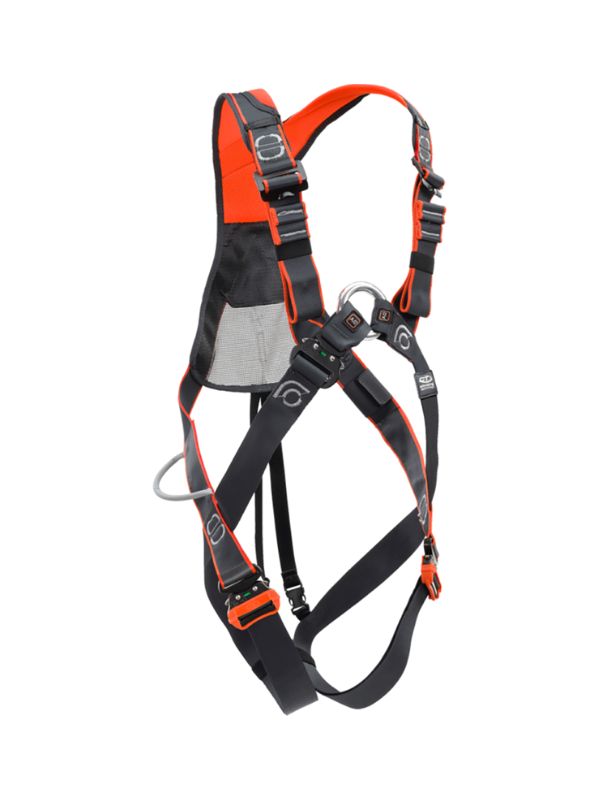
Full body safety harness for working at height
Basic Components of a Safety Harness
A standard safety harness typically includes the following key components:
Body Harness: The main webbing system that fits securely around the body (shoulders, chest, and thighs). It distributes fall forces evenly across the body. In a full-body harness, the impact force is spread out to reduce concentrated pressure on a single point.
D-Ring (Anchorage Point): A high-strength metal ring, usually positioned at the back (dorsal) or chest (sternal) area. It serves as the connection point for a shock-absorbing lanyard or a fixed anchorage system.
Adjustment Buckles: Allow the harness to be tightened and adjusted to fit different body sizes properly, ensuring a snug, secure fit and safe movement during work.
Shock-Absorbing Lanyard (When Integrated): A component designed to absorb and dissipate energy in the event of a free fall. It reduces the impact force exerted on the body, helping to minimize the risk of spinal and internal injuries.
The Role of Safety Harnesses in Work at Height
Preventing Falls: A safety harness secures the worker’s body to a certified anchorage system, reducing the risk of slipping, losing balance, or falling from height.
Reducing Impact Force in Case of an Accident: When used together with a shock-absorbing lanyard and a compliant anchorage point, the system absorbs and distributes fall forces effectively, minimizing the risk of severe injuries.
Ensuring Legal Compliance: According to occupational safety and health regulations in Vietnam, workers performing tasks at heights of 2 meters or more must be equipped with certified fall protection equipment. Using a compliant safety harness helps employers meet legal requirements and maintain workplace safety standards.
Common Types of Safety Harnesses Today
In today’s market, safety harnesses are categorized based on their structure and intended application. Choosing the right type not only ensures maximum safety but also helps optimize costs and work efficiency for different industries.
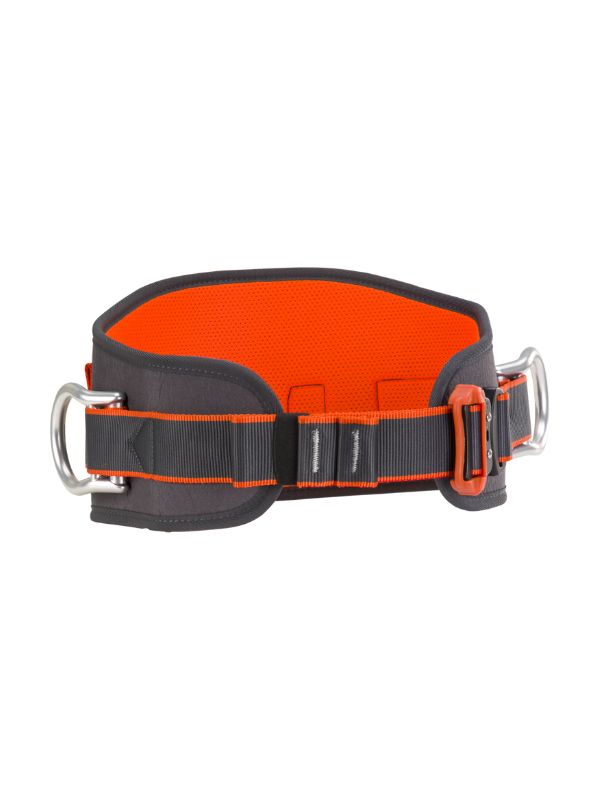
This type of harness secures only the waist and hip area and does not include shoulder straps.
Suitable for:
Climbing utility poles
Telecommunications tower maintenance
Tasks that require work positioning rather than free-fall arrest
Advantages:
Lightweight and easy to use
More affordable than full-body harnesses
However, a half-body harness is not suitable for high free-fall situations, as the impact force is not evenly distributed across the body
Skylotec Waist Tec Work Positioning Belt
Single-Lanyard / Double-Lanyard Safety Harness
This classification is based on the number of lanyard hooks connected to an anchorage point.
Single-Lanyard Harness
Used when working at a fixed position
Suitable for simple tasks with minimal movement
Double-Lanyard Harness
Designed for continuous movement at height
Allows workers to transfer between anchorage points while always keeping at least one hook securely connected
Increases safety when installing steel structures or working on scaffolding
When working on beams, steel frameworks, or long scaffolding systems, a double-lanyard setup is mandatory to ensure there is no moment of “unsecured anchorage” during movement.
Safety Harness with Integrated Shock-Absorbing Lanyard
This system combines a safety harness with an energy-absorbing lanyard designed to reduce fall impact forces.
Functions:
Reduces impact force in the event of a free fall
Minimizes the risk of spinal and internal injuries
Complies with international safety standards
Recommended for:
Working at heights of 2 meters or more
Projects with a risk of free fall
Worksites requiring EN or ANSI compliance
For modern construction projects, a shock-absorbing lanyard is almost a mandatory component of a complete fall protection system.
Comparison Table of Safety Harness Types
Harness Type
Protection Level
Suitable Applications
Advantages
Recommended Use
Full Body
⭐⭐⭐⭐⭐
Construction, work at height
Even force distribution, highest safety
Recommended for most projects
Half Body
⭐⭐⭐
Utility pole climbing, work positioning
Lightweight, lower cost
Not suitable for high free-fall situations
Single Lanyard
⭐⭐⭐
Fixed-position tasks
Simple and easy to use
Suitable for minimal movement tasks
Double Lanyard
⭐⭐⭐⭐
Moving along scaffolding
Safer when transferring between anchor points
Steel structure installation
With Shock Absorber
⭐⭐⭐⭐⭐
High fall-risk projects
Maximum fall force reduction
Mandatory for international-standard projects
What Safety Harness Standards Are Considered Good?
When selecting a safety harness for working at height, technical standards and certification are the most critical factors determining safety performance and legal compliance on site. A product that meets international standards not only ensures adequate load-bearing capacity but also helps businesses comply with occupational safety regulations, minimizing legal risks and serious accidents.
Below are the key standards you should pay attention to:
EN361 Standard (Europe)
EN361 is a European CE certification standard for full body harnesses used in fall protection systems.
This standard specifies:
The load-bearing capacity of D-ring attachment points
The strength of webbing under dynamic load
Force distribution design in the event of a fall
Impact and tensile strength testing requirements
Harnesses that meet EN361 are widely used in large-scale construction projects and international developments.
ANSI Standard (United States)
ANSI is the American safety standards system applied to fall protection equipment and personal protective gear.
For safety harnesses, ANSI requires:
Static and dynamic load testing
Evaluation of metal components, buckles, and connection points
Real-world testing with simulated free-fall scenarios
Products that meet ANSI standards are highly regarded for their safety and durability, especially in harsh environments such as heavy industry, oil and gas, and power utilities.
TCVN Standards (Vietnam)
In Vietnam, safety harnesses used for occupational work must comply with national technical regulations and relevant TCVN standards related to personal protective equipment (PPE) and working at height.
According to occupational safety regulations:
Workers operating at heights of 2 meters or more are required to use fall protection equipment
Equipment must undergo periodic inspection and certification
Employers are responsible for providing certified equipment with clear origin and documentation
Using safety harnesses that meet required standards not only ensures worker safety but also helps businesses avoid violations during labor safety inspections.
What Is the Load Capacity of a Safety Harness?
A standard-compliant safety harness typically has:
A minimum static load capacity of 15 kN or higher (approximately 1,500 kgf)
When combined with a shock-absorbing lanyard, the impact force exerted on the body is limited to a safe level in accordance with international standards
Note: The safe working load is different from the breaking strength. Always use the equipment according to the manufacturer’s recommendations.
In Which Industries Are Safety Harnesses Used?
In practice, safety harnesses for working at height are mandatory equipment in many industries where there is a risk of falling. Depending on the specific nature of the job, different types of harnesses are selected to ensure maximum safety and compliance with technical regulations.
Below are the most common applications:
Construction
In the construction industry, safety harnesses are used when:
Working on scaffolding
Installing steel structures
Working on rooftops or high-rise concrete floors
Pouring columns and beams at elevated positions
This is a high free-fall risk environment. Therefore, a full body harness combined with a shock-absorbing lanyard and certified anchor points is mandatory.
Power & Electrical Industry
In the electrical sector, safety harnesses are commonly used when:
Climbing utility poles
Maintaining overhead power lines
Installing medium- and high-voltage electrical equipment
The equipment must provide proper insulation, withstand harsh weather conditions, and allow secure work positioning while operating on poles.
Solar Panel Installation
Technicians installing solar panel systems often work on metal roofs, sloped rooftops, or high-rise factory buildings.
Safety harnesses help to:
Maintain stability while moving on slippery roof surfaces
Reduce the risk of slips and falls
Ensure safe and efficient project completion
In this field, a full body harness with a double lanyard combined with a shock absorber is a common choice.
Building Glass Cleaning
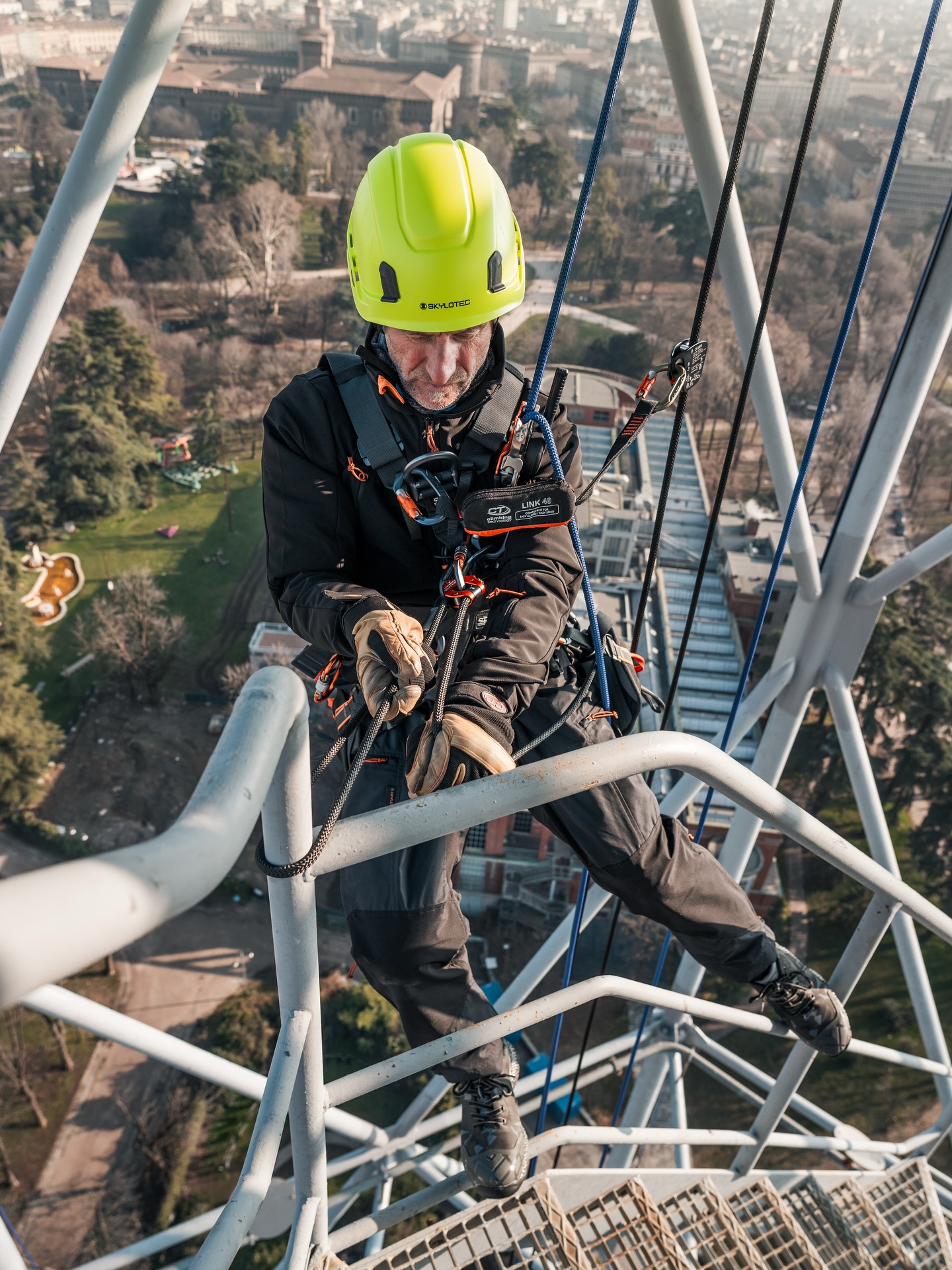
Building glass cleaning and façade maintenance workers use safety harness systems within professional rope access setups.
This application requires:
Multiple anchor points
A dual fall-arrest system
Equipment that meets international standards
This type of work demands high-quality equipment and strict inspection procedures to ensure maximum safety.
Factory & Industrial Maintenance
In factories and industrial zones, safety harnesses are used when:
Repairing elevated ventilation systems
Maintaining steel frames and factory roofs
Inspecting storage tanks and silos
Using safety harnesses helps reduce workplace accidents and ensures businesses comply with occupational safety regulations.
Rescue & Emergency Response
In emergency situations, rescue teams use safety harnesses to:
Access hazardous areas
Rescue individuals trapped at height
Move through complex or difficult terrain
Rescue systems typically use specialized harnesses designed with multiple attachment points and high load-bearing capacity to ensure maximum safety and reliability.
Guide to Choosing the Right Safety Harness
Selecting the right safety harness not only ensures maximum safety but also optimizes costs and work efficiency. Below are the key criteria that engineers, contractors, and occupational safety managers should consider before making a decision.
Based on Working Height
Working height is the first factor to evaluate.
From 2m – 6m: A full body harness combined with a basic shock-absorbing lanyard is recommended.
Above 6m: A full body harness that meets EN/ANSI standards with a certified fall-arrest energy absorption system is mandatory.
Above 10m or on complex steel structures: A double lanyard is recommended to ensure that at least one anchor point remains secured at all times while moving.
The higher the working height, the stricter the fall protection requirements must be.
Based on the Working Environment
Each work environment requires different technical characteristics:
Construction sites: Prioritize abrasion-resistant webbing and strong metal buckles.
Electrical industry: Use corrosion-resistant materials suitable for outdoor conditions.
Factories and industrial zones: Choose flexible harnesses that are easy to operate.
Chemical or high-humidity environments: Select harnesses with UV resistance and anti-degradation properties.
Choosing the wrong type of harness can reduce its lifespan and increase safety risks.
Based on User Weight
Every safety harness has a specified Working Load Limit (WLL).
Commonly designed for users weighing 50 kg – 100 kg
Some premium models support up to 140 kg (including carried tools and equipment)
Avoid selecting a harness that operates near its maximum load capacity. Always maintain a safety margin in accordance with the manufacturer’s recommendations.
Based on Project Standard Requirements
Large-scale projects, international developments, or FDI factories often require:
Safety harnesses that meet EN361 (European standard)
Or ANSI (United States standard)
Clear certification and inspection documentation
If a project requires complete legal documentation, using non-compliant harnesses may result in rejection during inspection and acceptance procedures.
Should You Choose a Budget or Premium Safety Harness?
This is a common question for many businesses.
Budget Safety Harnesses:
Suitable for short-term, low-risk tasks
Lower initial investment cost
Limited durability and lifespan
Premium Safety Harnesses (International Brands):
Higher durability and superior load capacity
Optimized safety performance in free-fall situations
Accepted in high-standard and international projects
When it comes to life-saving equipment, cost should not be the only deciding factor. Investing in the right equipment helps reduce accident risks and potential legal expenses in the long run.
If you are unsure which safety harness is suitable for your work requirements, let FPR’s technical team assist you.
👉 Contact FPR Supply for free consultation and receive a solution tailored to your project needs.
How to Use a Safety Harness Properly
Using a safety harness correctly when working at height is crucial to ensuring effective protection in the event of an accident. No matter how high the product standards are, improper wearing techniques or poor maintenance can still lead to serious risks.
Below are essential guidelines that workers and safety officers must follow:
Inspection Before Use
Before each work shift, thoroughly inspect the entire harness:
Check the webbing for fraying, cuts, or fiber damage
Inspect stitching for loose or broken threads
Ensure the D-ring is not bent, cracked, or rusted
Verify that adjustment buckles operate smoothly
Confirm that the shock absorber (if equipped) has not been deployed
If any signs of damage are found, do not continue using the harness.
How to Wear a Safety Harness Correctly
Proper wearing technique ensures even force distribution in the event of a fall:
Keep the harness straight and free from twists
Put it on over both shoulders like a jacket
Adjust the chest strap and leg straps so they fit snugly—not too loose and not overly tight to the point of restricting breathing
Make sure the D-ring anchor point is positioned correctly at the center of the back (for standard full body harnesses)
👉 After wearing the harness, try sitting down and moving lightly to check for comfort and secure fit.
Certified Anchor Points
A safety harness is only effective when connected to a properly certified anchor point:
The anchor point must withstand the minimum required force according to standards (typically ≥ 15 kN)
Never anchor to weak materials such as thin railings, water pipes, or temporary structures
Prioritize the use of dedicated anchor hooks or fixed anchorage systems
Never tie the lanyard to untested or uncertified structural components
When Should You NOT Use a Safety Harness?
Stop using a safety harness in the following situations:
The harness has previously been subjected to a fall arrest
It has exceeded the manufacturer’s recommended service life
Any signs of damage are detected
No certified and secure anchor point is available
The working environment exceeds technical specifications (e.g., strong corrosive chemicals, extreme high temperatures)
Safety does not allow for “temporary” or improvised solutions.
Proper Storage and Maintenance of Safety Harnesses
To extend service life and maintain protective performance:
Store in a dry, well-ventilated area
Avoid prolonged exposure to direct sunlight and UV rays
Keep away from chemicals, oils, grease, and solvents
Clean gently with a damp cloth; do not use harsh detergents
Hang the harness properly and avoid long-term folding or twisting
Companies should maintain usage records and conduct periodic inspections to ensure compliance with occupational safety regulations.
When selecting a safety harness, the key factor is not only the product itself but also the supplier. FPR is a trusted partner of many contractors and businesses in the work-at-height industry, thanks to its technical expertise and clear commitment to quality.
Specialized in Work-at-Height Safety Equipment
FPR Supply focuses specifically on fall protection and height safety solutions. Rather than offering a wide range of unrelated products, we concentrate on core equipment such as:
Full body safety harnesses
Shock-absorbing lanyard systems
Anchor hooks and connecting devices
Professional rope access solutions
This specialization allows the FPR Supply team to understand the unique requirements of each industry and provide the most suitable solutions for every project.
International Standard-Compliant Products
All safety harnesses at FPR Supply are carefully selected from reputable brands that meet EN, ANSI, and other strict technical standards.
Each product includes:
Clear technical specifications
Complete certification documentation
Load-bearing capacity compliant with international standards
This helps businesses easily pass inspections and meet project safety documentation requirements.
On-Site Technical Support
FPR Supply goes beyond simply selling products. We also provide:
Consultation to select the right harness for your specific project
Proper usage guidance
Recommendations for safe anchorage solutions
We work alongside our clients to ensure that fall protection systems operate effectively in real-world conditions.
Clear and Transparent Warranty Policy
FPR Supply is committed to:
Transparent warranty policies
Product replacement support in case of manufacturer defects
Guidance on replacement when products reach the end of their service life
Clear policies give customers confidence when investing in life-saving protective equipment