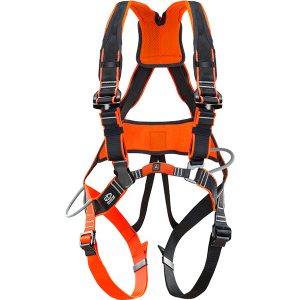
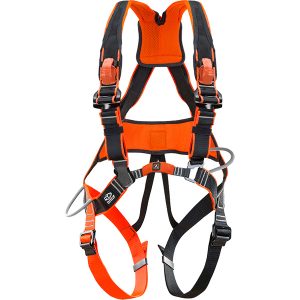
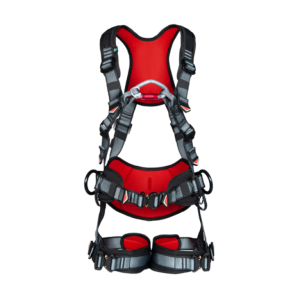
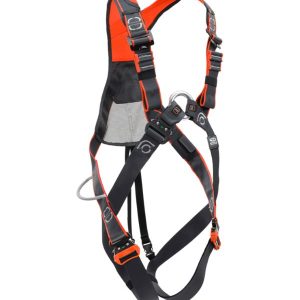
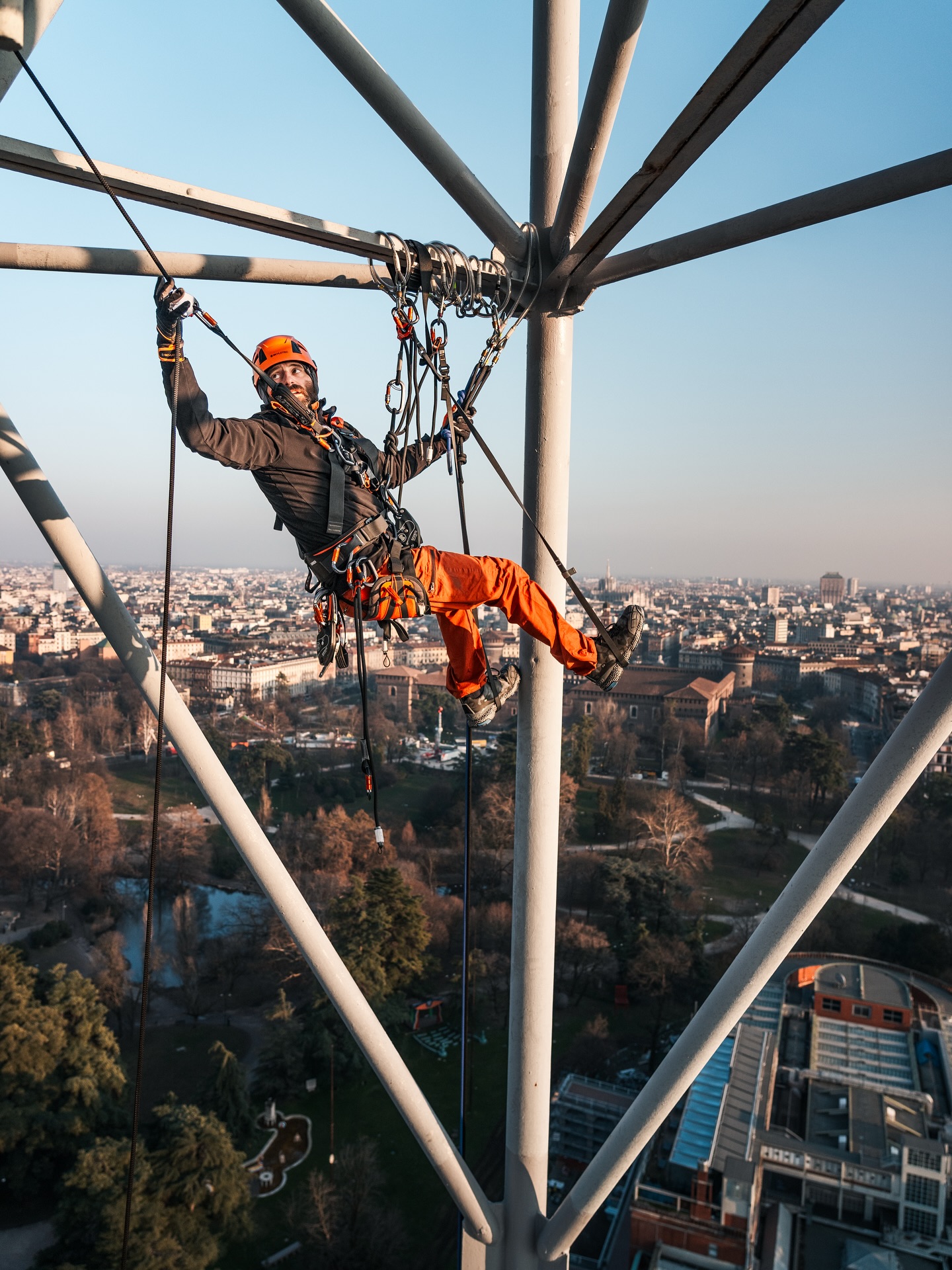
A full body safety harness for working at height is a critical piece of personal protective equipment (PPE) used to protect workers from fall hazards in elevated work environments. Designed with high-strength webbing straps that secure the shoulders, chest, and legs, a full body safety harness distributes fall forces across the strongest parts of the body during a fall. This design significantly reduces the risk of serious injury compared to outdated body belts and ensures a safer connection to a complete fall protection system.
A modern full body safety harness is typically used together with a lanyard or self-retracting lifeline connected to a certified anchorage point. When properly fitted and used as part of a personal fall arrest system, the harness helps arrest a fall safely and keep the worker in an upright position, minimizing the risk of suspension trauma and other severe injuries.
Industries such as construction, telecommunications, utilities, oil & gas, and industrial maintenance rely on safety harnesses for working at height to maintain safe jobsite operations and comply with international safety standards. Choosing the right harness is essential for both worker protection and regulatory compliance.
At FPR Supply, we provide certified full body safety harnesses designed for professional working at height applications. Our products meet international safety standards and are trusted by contractors and industrial companies across Vietnam.
What Is a Full Body Safety Harness for Working at Height?
A full body safety harness is essential PPE designed to protect workers from falls when working at height. It fits around the shoulders, chest, and legs to distribute impact forces safely across the body.
Used as part of a Personal Fall Arrest System (PFAS), the harness connects to self retracting lifeline or lanyards and a secure anchor point to stop falls quickly and reduce injury risk.
It is widely used in construction, maintenance, and industrial work, providing both safety and comfort through adjustable straps and multiple attachment points.
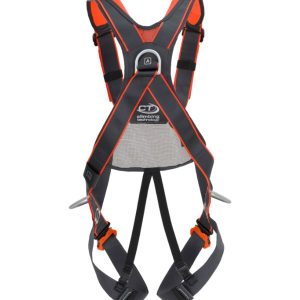
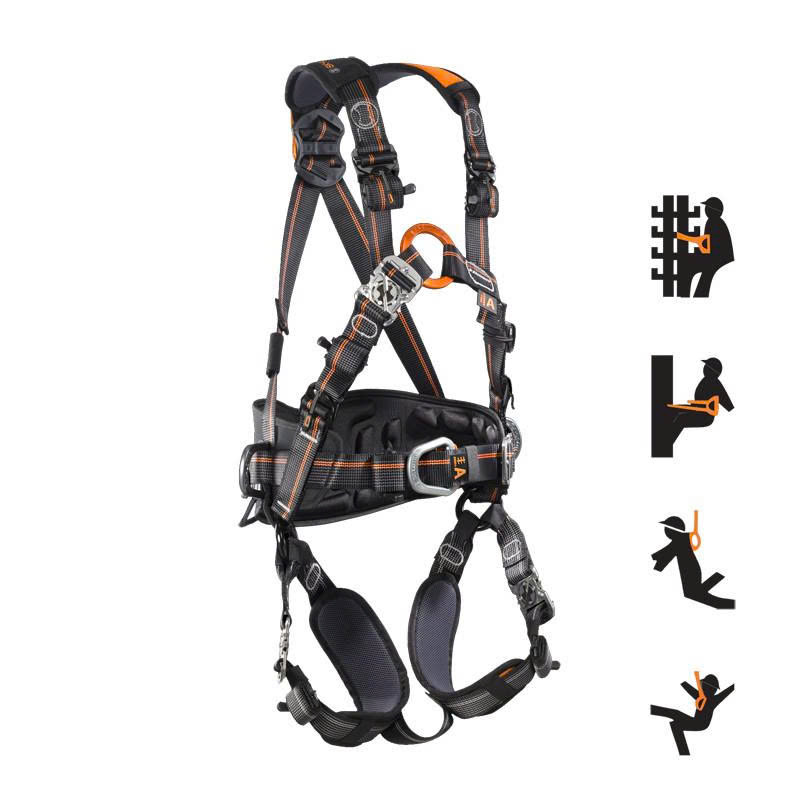
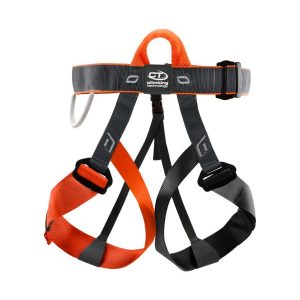
Full body safety harness for working at height with padded straps and multiple D-rings for fall protection
How a Full Body Safety Harness Works in a Fall Protection System
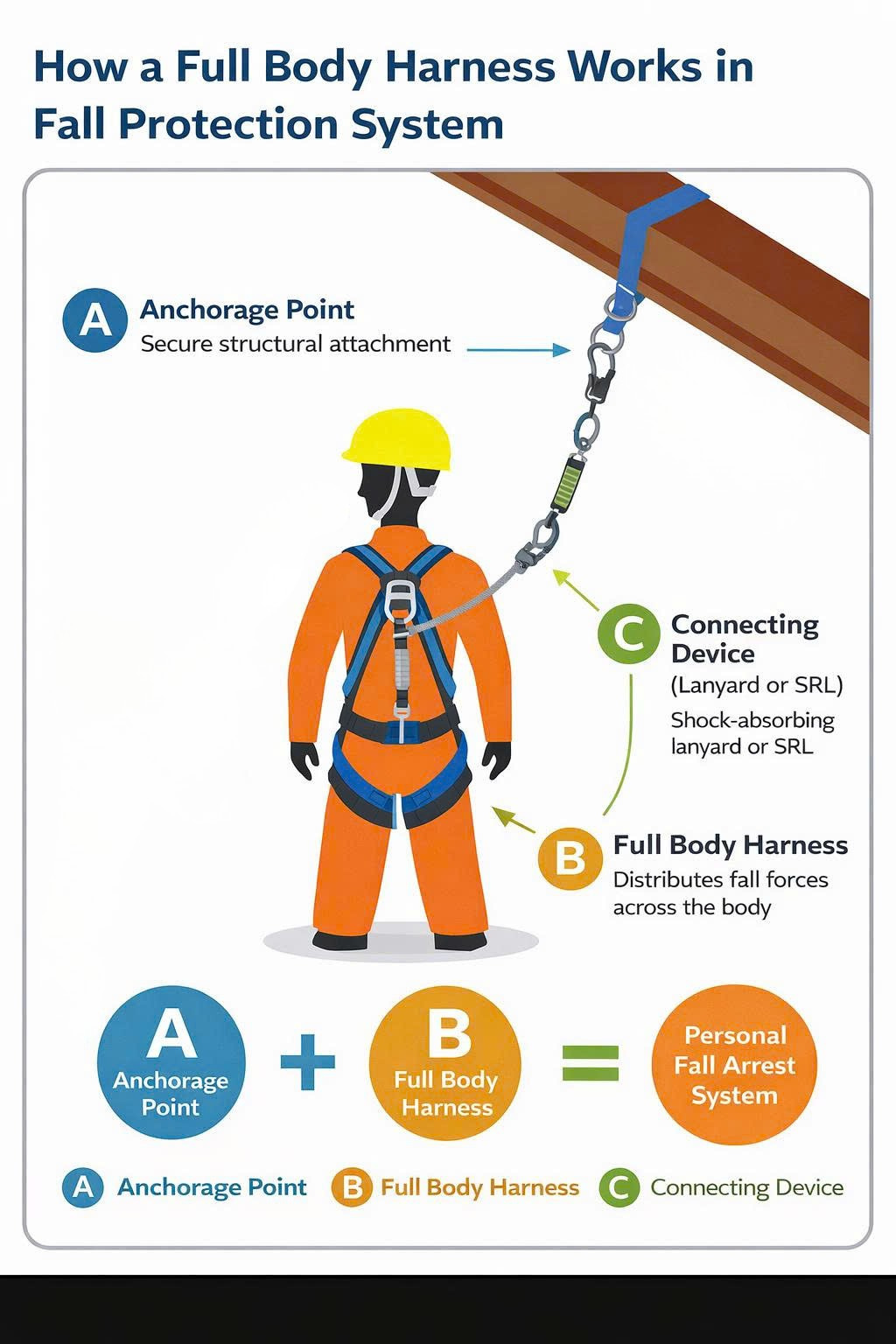
A fall protection harness does not function independently — it is part of a complete personal fall arrest system (PFAS) designed to stop a fall safely and minimize the risk of injury. This system typically consists of three essential components: a secure anchorage point, a connecting device, and the full body harness itself. Each element plays a critical role in protecting workers who perform tasks at height.
Anchorage Point
The anchorage point is the secure structural attachment where the fall protection system is connected. It may be a certified anchor bolt, beam clamp, horizontal lifeline system, or a structural steel component capable of supporting the required load. A properly rated anchorage must withstand significant force in the event of a fall. Without a strong and compliant anchor, even the best fall protection harness system cannot provide adequate protection.
Connecting Device (Lanyard or SRL)
The connecting device links the worker’s harness to the anchorage point. This connection is typically made using a shock-absorbing lanyard or a self-retracting lifeline (SRL). A shock-absorbing lanyard is designed to extend slightly during a fall, reducing the impact force applied to the body. An SRL automatically retracts and locks when a sudden drop occurs, limiting free-fall distance and quickly arresting the fall. Both devices are essential components in maintaining the effectiveness of a personal fall arrest system.
Full Body Safety Harness
The full body safety harness secures the worker and distributes fall forces across the strongest areas of the body, including the shoulders, chest, pelvis, and thighs. When connected to a fall protection system, the harness keeps the worker properly positioned and prevents them from slipping out during a fall. By spreading the impact forces across multiple points of the body, the harness significantly reduces the risk of severe injury and provides the necessary support for safe rescue if needed.
How a full body harness works in fall protection system
Main Components of a Full Body Safety Harness
Understanding the key full body safety harness parts is important for proper use, inspection, and safety when working at height. A modern harness is designed with several integrated components that provide strength, stability, and comfort for the user. These full body harness details work together to secure the worker and distribute fall forces effectively during a fall.
Webbing Straps
Webbing straps form the main structure of the harness. Made from high-strength polyester or nylon, these straps wrap around the shoulders, chest, and legs to secure the user while distributing impact forces across major muscle groups.
D-Rings (Dorsal, Front, Side)
D-rings are the metal attachment points that connect the harness to a fall protection system.
Dorsal D-ring: Used for fall arrest systems.
Front (sternal) D-ring: Often used for ladder climbing or vertical lifelines.
Side D-rings: Designed for work positioning applications.
Buckles and Adjusters
Buckles allow users to fasten and adjust the harness for a secure and comfortable fit. Common types include tongue buckles, quick-connect buckles, and pass-through buckles.
Padding and Comfort Features
Many harnesses include padded shoulder and leg straps to improve comfort during long work periods. These features help reduce fatigue and encourage proper use.
Labels and Inspection Tags
Labels and inspection tags provide essential information such as manufacturer details, serial numbers, and safety certifications. They are also used for inspection records and compliance checks. If these labels are missing or damaged, the harness should be removed from service.
Types of Full Body Safety Harness for Working at Height
Different work environments require different full body safety harnesses to ensure safety and efficiency. The right safety harness full body design depends on the type of work, fall risk level, and the fall protection system being used. Below are the most common types used in professional working at height applications.
Standard Fall Arrest Harness
A standard fall arrest harness is the most common type used in construction and general industrial work. It usually features a dorsal D-ring on the back for connecting to a lanyard or self-retracting lifeline. This harness is designed to safely stop a fall and distribute impact forces across the body.
A work positioning harness includes side D-rings that allow workers to attach positioning lanyards and maintain a stable working position. It is commonly used by electricians, telecom technicians, and utility workers who need hands-free stability while working at height.
A confined space rescue harness includes additional attachment points such as front or shoulder D-rings to support lifting and rescue operations. It is typically used in tanks, silos, manholes, and other confined spaces where emergency retrieval may be required.
Tower Climbing Harness
A tower climbing harness is designed for workers who frequently climb structures like communication towers or wind turbines. These harnesses often include front D-rings and enhanced back support for comfort during extended climbing tasks.
Welding / Arc Flash Resistant Harness
A welding or arc flash resistant harness is made from heat-resistant and flame-retardant materials to withstand sparks and high temperatures. It is commonly used in welding, oil & gas, and heavy industrial environments.
Full Body Safety Harness Specifications
Understanding the full body safety harness specification is important when selecting the right equipment for working at height. Safety harnesses are designed to meet strict performance standards to ensure they can withstand the forces generated during a fall and provide reliable protection for workers.
Typical specifications of a full body safety harness include:
High-strength polyester webbing designed for durability and resistance to wear, UV exposure, and environmental conditions.
Minimum breaking strength of approximately 22 kN, which meets common international safety standards for fall protection equipment.
Adjustable shoulder and leg straps that allow users to achieve a secure and comfortable fit.
Dorsal fall arrest D-ring located on the back, used as the primary attachment point for lanyards or self-retracting lifelines.
Optional side or front D-rings for work positioning, ladder climbing systems, or rescue applications.
Weight capacity typically ranging from 130–310 lbs (59–140 kg), including the worker and their equipment.
These specifications are essential for ensuring that the harness meets safety requirements and performs correctly as part of a fall protection system. Choosing a harness that complies with recognized standards helps maintain regulatory compliance and provides workers with dependable protection when operating at height.
Full Body Harness For Working at Height Safety Standards
When selecting fall protection equipment, it is important to ensure the harness complies with recognized fall protection harness standards. These standards define the design, testing, and performance requirements that help ensure the equipment can safely protect workers during a fall. A full body harness OSHA compliant product or one that meets international certifications provides greater confidence in safety, reliability, and regulatory compliance.
OSHA Fall Protection Requirements
The Occupational Safety and Health Administration (OSHA) requires workers exposed to fall hazards to use approved fall protection systems. Under OSHA regulations, a full body harness must be used as part of a personal fall arrest system instead of body belts. These systems must be capable of supporting the required loads and properly distributing fall forces to reduce the risk of injury.
ANSI Z359.11 Standard
The ANSI Z359.11 standard sets detailed requirements for the performance, design, and testing of full body harnesses used in fall protection systems. It specifies factors such as minimum strength, dynamic performance testing, labeling requirements, and inspection guidelines to ensure the harness can safely arrest a fall.
EN 361 European Standard
In Europe, full body harnesses must comply with EN 361. This standard defines safety requirements and testing procedures to verify that harnesses provide reliable fall arrest protection. Products that meet EN 361 requirements are commonly used across European construction and industrial sectors.
Other International Standards
Other countries may follow additional safety standards such as those developed by International Organization for Standardization (ISO) or regional occupational safety authorities. Many global manufacturers design harnesses that comply with multiple standards to ensure their equipment can be used safely in different markets.
Why Certification Matters
Certification ensures that a harness has been tested and verified to meet strict safety requirements. Using certified fall protection equipment helps companies comply with workplace safety regulations, reduce accident risks, and protect workers operating at height. It also provides assurance that the harness can withstand the forces generated during a fall and perform reliably in real working conditions.
How to Choose the Right Full Body Safety Harness For Working At Height
Choosing the right full body harness is important for ensuring safety and efficiency when working at height. Here are the key factors to consider:
Based on Work Environment
Different jobs require different harness types. Standard fall arrest harnesses work for general construction, while specialized tasks like tower climbing, welding, or confined space work may require harnesses with additional features or protective materials.
D-Ring Configuration
D-ring placement determines how the harness connects to a fall protection system. A dorsal D-ring is used for fall arrest, front D-rings for ladder systems, and side D-rings for work positioning.
Weight Capacity
Always check the harness weight rating. Most full body harnesses support a total capacity of 130–310 lbs (59–140 kg), including the worker and their equipment.
Comfort and Ergonomics
Comfort features such as padded straps, breathable back support, and easy-adjust buckles help reduce fatigue and make the harness easier to wear for long periods.
Material and Durability
High-quality harnesses are made from strong polyester or nylon webbing with corrosion-resistant metal components to ensure long-term durability and reliable performance.
Contact FPR Supply today to speak with our specialists and ensure your team is equipped with reliable fall protection gear for working at height.
Full body harness for working at height - Fall protection system
Common Mistakes When Using a Full Body Safety Harness for Working at Height
Using a full body safety harness incorrectly can reduce its effectiveness and increase the risk of injury during a fall. Avoiding common mistakes helps ensure the harness performs properly as part of a fall protection system.
Loose Leg Straps: If leg straps are too loose, the harness may not distribute fall forces correctly, which can cause serious injury. Straps should be adjusted snugly while still allowing comfortable movement.
Incorrect Anchor Point: Connecting the harness to an improper or weak anchor point can lead to system failure during a fall. Always ensure the anchor point is strong, secure, and suitable for fall arrest systems.
Using an Expired Harness: Harnesses have a service life and should not be used beyond the manufacturer’s recommended period. Over time, materials can weaken due to wear, UV exposure, and environmental conditions.
Ignoring Inspection Tags: Inspection tags provide important information about the harness, including certification, inspection records, and manufacturing details. If tags are missing or illegible, the harness should be removed from service until it can be properly verified
Conclusion
A full body safety harness is a critical part of any fall protection system for workers operating at height. Understanding the different harness types, key components, safety standards, and proper usage helps ensure both safety and compliance in demanding work environments. Choosing the right harness not only protects workers from fall hazards but also improves comfort, efficiency, and overall workplace safety.
If you need assistance selecting the right fall protection equipment, FPR Supply is here to help. Our team can guide you through harness specifications, safety standards, and the best solutions for your specific industry.
Contact FPR Supply today to learn more about our full range of fall protection products and get expert support for your workplace safety needs