


Chưa phân loại
What Is Rope Access? Everything You Need to Know About Rope Access
Jun
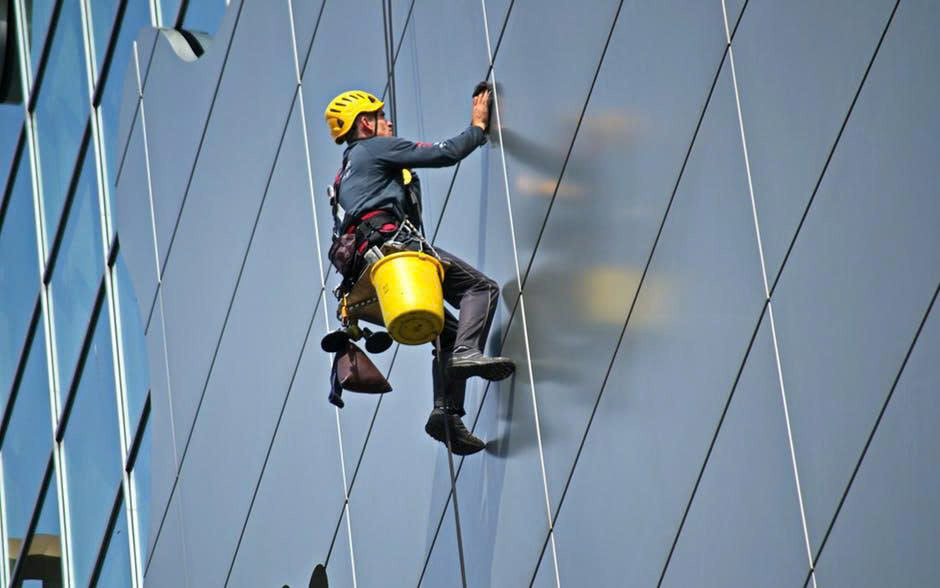
Rope access is a widely used work-at-height solution for tasks carried out in confined spaces and hard-to-reach locations, including construction, industrial maintenance, high-rise window cleaning, oil and gas, and wind energy sectors. Thanks to its flexibility, efficiency, and high level of safety, rope access has become a preferred method for accessing challenging work areas.
But what exactly is rope access equipment? What types of equipment are included in a rope access system? What safety standards must be followed, and how can you choose the right equipment for your application?
In this article, FPR Supply will provide a comprehensive overview of rope access equipment, including its essential components, relevant safety standards, and key considerations for working safely at height using rope access techniques.
1. What Is Rope Access?
Rope access is a method of accessing and performing work at height using a specialized rope system combined with personal protective equipment (PPE). This technique enables technicians to move, position themselves, and carry out tasks in difficult-to-reach locations without the need for traditional access solutions such as scaffolding or aerial work platforms.
Thanks to its flexibility, efficiency, and high safety standards, rope access has become a widely adopted solution across various industries. It is particularly valued for its ability to provide safe access while minimizing setup time, reducing operational costs, and limiting disruption to surrounding work areas.
1.1. What Is Rope Access Equipment?
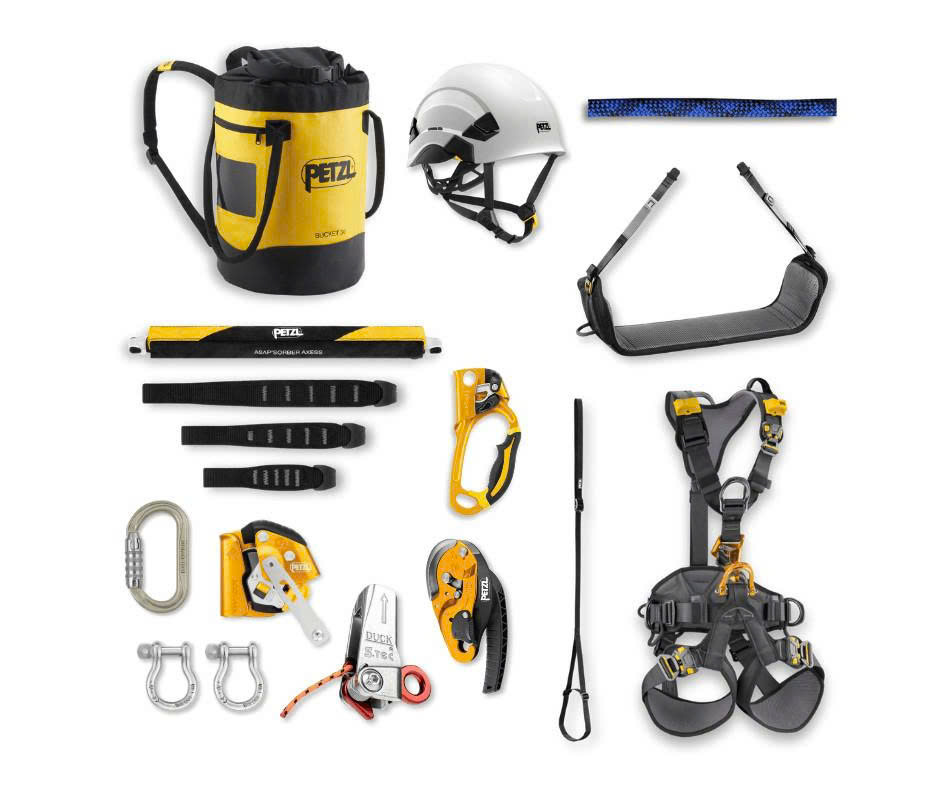
Rope access equipment refers to the collection of specialized devices and gear used in rope access systems to ensure the safety of workers performing tasks at height. This equipment typically includes rope access ropes, full-body harnesses, ascenders and descenders, carabiners, fall arrest devices, safety helmets, and various supporting accessories.
Each component within the system is specifically designed and tested to meet strict safety standards, helping to minimize risks when working at significant heights or in hazardous environments. When used correctly, rope access equipment provides a safe, efficient, and reliable means of accessing difficult-to-reach work areas while maintaining the highest levels of worker protection.
1.2. The Role of Rope Access Equipment in Working at Height
Rope access equipment plays a critical role in ensuring safety, stability, and operational efficiency when working at height. A properly designed and compliant rope access system helps to:
- Provide flexible access and movement in hard-to-reach locations
- Reduce the risk of falls while working at height
- Improve productivity during installation, inspection, and maintenance tasks
- Save setup time compared to traditional scaffolding systems
- Optimize operational costs for businesses and project owners
In addition, the correct use of rope access equipment allows technicians to work more comfortably for extended periods while meeting the stringent safety requirements of modern industrial environments. By combining mobility, reliability, and worker protection, rope access systems have become a preferred solution for a wide range of work-at-height applications.
1.3. Applications of Rope Access
Today, rope access is widely used across a variety of industries and sectors, including:
- Construction and building maintenance
- High-rise window cleaning
- Industrial plants and power generation facilities
- Offshore oil and gas operations
- Wind energy and renewable energy projects
- Rescue and emergency response operations
- Structural inspections and infrastructure maintenance
Thanks to its exceptional flexibility, efficiency, and high level of safety, rope access has become a preferred work-at-height solution for many organizations worldwide. Its ability to provide safe access to challenging locations while reducing downtime and operational costs makes it an ideal choice for a wide range of inspection, maintenance, repair, and installation tasks.
2. How Does Rope Access Work?
2.1. The Principle of Rope Access
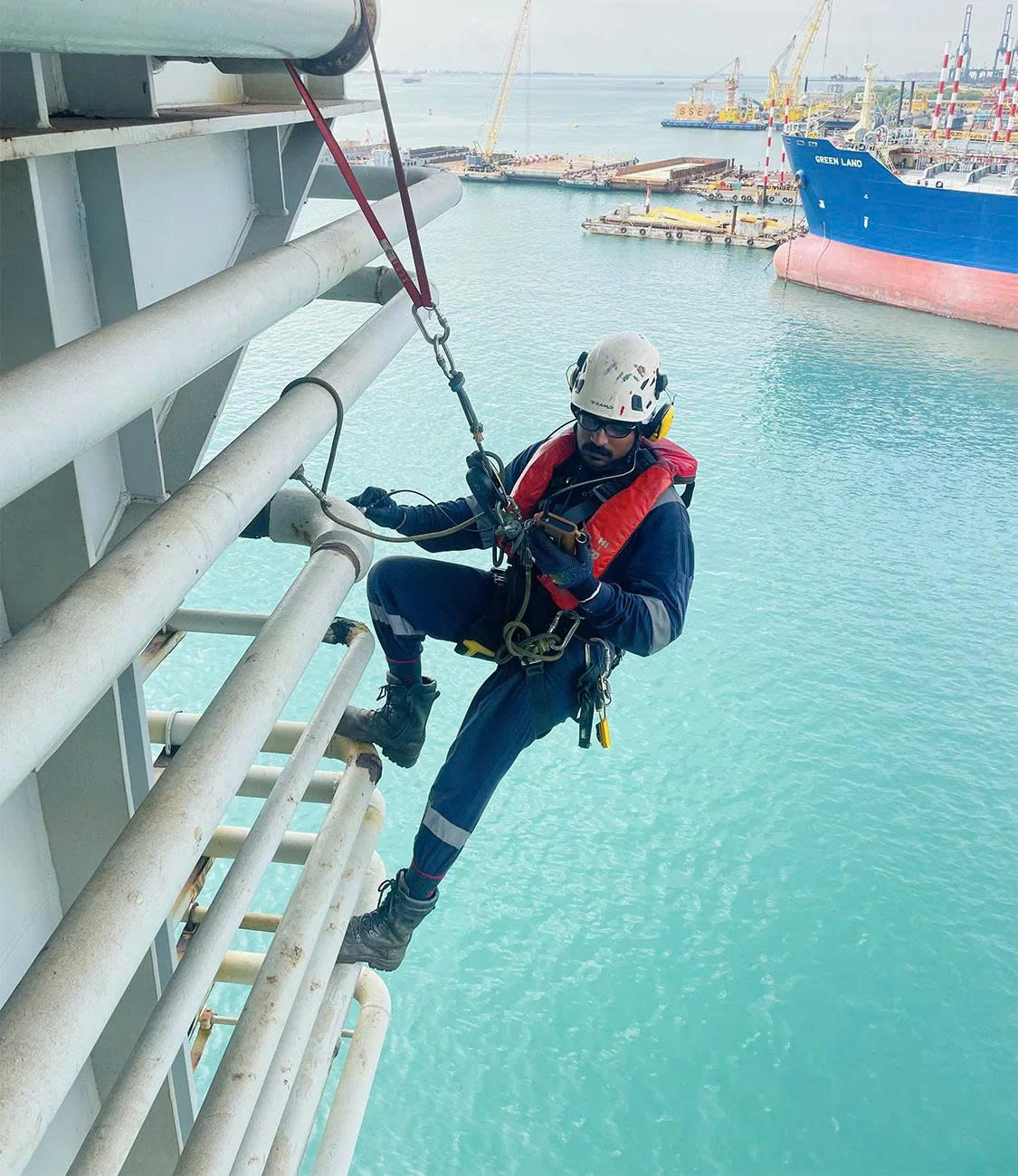
Rope access works by using a system of specialized ropes and equipment that enables technicians to safely access, move, and perform tasks at height or in difficult-to-reach locations. Workers are connected to secure anchor points through rope access ropes and certified personal protective equipment (PPE), ensuring continuous protection throughout the operation.
This method allows technicians to ascend, descend, suspend themselves, or move horizontally across structures with a high degree of flexibility, eliminating the need for traditional scaffolding or bulky lifting equipment.
2.2. Working Rope and Safety Rope System
A rope access system typically consists of two independent ropes:
- Working Rope: The primary rope used for positioning, movement, and carrying out work tasks. Technicians use descenders, ascenders, and other rope access devices to travel along this rope safely and efficiently.
- Safety Rope: A secondary backup rope connected to a fall arrest device. This rope serves as an independent safety system designed to protect the worker in the event of a failure or malfunction of the working rope system.
The use of these two independent rope systems significantly enhances safety and is a fundamental requirement of internationally recognized rope access standards such as IRATA and SPRAT.
2.3. How Rope Access Improves Safety When Working at Height
Compared to many traditional access methods, rope access is widely recognized as one of the safest solutions for working at height when implemented correctly and in accordance with established procedures. This system helps to:
- Reduce the risk of falls through multiple layers of fall protection
- Minimize exposure to hazardous work areas
- Provide technicians with greater control over their working position
- Reduce equipment setup and dismantling time
- Improve access to confined, restricted, or complex locations
In addition, modern rope access equipment is designed and tested to meet strict strength and safety requirements, ensuring reliable performance even in demanding industrial environments. When combined with proper training, risk assessment, and equipment inspection, rope access offers a highly effective and safe method for carrying out work at height.
2.4. Rope Access vs. Scaffolding and Aerial Work Platforms
The following table compares rope access with traditional access methods commonly used for working at height:
| Criteria | Rope Access | Scaffolding | Aerial Work Platforms (AWPs) |
|---|---|---|---|
| Accessibility | Highly flexible, ideal for hard-to-reach areas | Limited by structural configuration | Dependent on available operating space |
| Setup Time | Fast | Time-consuming installation and dismantling | Moderate |
| Cost | Cost-effective for many applications | Higher installation and labor costs | Significant rental and operating expenses |
| Flexibility | High | Low | Moderate |
| Suitability for High-Rise Structures | Excellent | Difficult to implement in certain locations | Limited by platform reach and height capacity |
| Safety | High when performed according to standards and procedures | Dependent on proper erection and inspection | Dependent on equipment condition and operation |
Due to its flexibility, cost efficiency, and high level of safety, rope access has become an increasingly popular solution for modern work-at-height applications. It is widely used for maintenance, inspection, installation, cleaning, and construction activities where traditional access methods may be impractical, time-consuming, or costly.
3. Common Rope Access Equipment
To ensure safety and efficiency when working at height, a rope access system must be equipped with specialized equipment that complies with international safety standards. Each component serves a specific purpose in supporting movement, positioning, and protecting technicians throughout the job.
3.1. Rope Access Ropes
3.1.1. Static Rope
Static rope is the most commonly used type of rope in rope access applications due to its low elongation characteristics under load. This limited stretch allows technicians to ascend and descend more efficiently, maintain stable positioning, and perform work-at-height tasks with greater precision.
Static ropes are typically manufactured from high-strength polyamide (nylon) or polyester fibers, providing excellent durability, abrasion resistance, and load-bearing capacity. These properties make them well suited for demanding industrial environments where reliability and safety are essential.
Because of their stability and strength, static ropes are widely used as both working ropes and safety ropes in professional rope access systems.

3.1.2. Rope Access Rope Standards
Rope access ropes must comply with recognized international safety standards to ensure reliable performance and worker protection. Some of the most widely accepted standards include:
- EN 1891 – Low stretch kernmantle ropes for rope access and work positioning
- ANSI – American National Standards for fall protection and rope access equipment
- NFPA – Standards for life safety ropes and equipment used in rescue operations
- UIAA – International standards established by the International Climbing and Mountaineering Federation
These standards help ensure that rope access ropes provide adequate strength, durability, abrasion resistance, and consistent performance in demanding industrial environments.
3.1.3. How to Choose the Right Rope Diameter
The appropriate rope diameter depends on the equipment being used, the specific application, and the working environment. In professional rope access systems, rope diameters typically range from 10 mm to 13 mm.
Selecting the correct rope diameter is essential for ensuring optimal system performance and compatibility with rope access devices such as descenders, ascenders, and fall arresters. A properly matched rope and device combination improves safety, handling, and operational efficiency while reducing wear on both the rope and equipment.
When choosing a rope, it is important to follow the manufacturer’s recommendations regarding compatible rope diameters and intended applications.
3.2. Safety Harness
3.2.1. Full-Body Safety Harness
A full-body harness is one of the most critical pieces of personal protective equipment (PPE) in a rope access system. It is designed to distribute fall arrest forces evenly across the body in the event of a fall, helping to reduce the risk of serious injury.
Full-body harnesses are typically equipped with multiple attachment points to support a variety of applications, including rope access work, work positioning, fall arrest, and rescue operations. These connection points allow technicians to maintain stability, mobility, and safety while performing tasks at height.
Modern rope access harnesses are engineered for both comfort and performance, enabling workers to remain suspended for extended periods while maintaining proper support and freedom of movement.
3.2.2. Rope Access Seat (Work Seat)
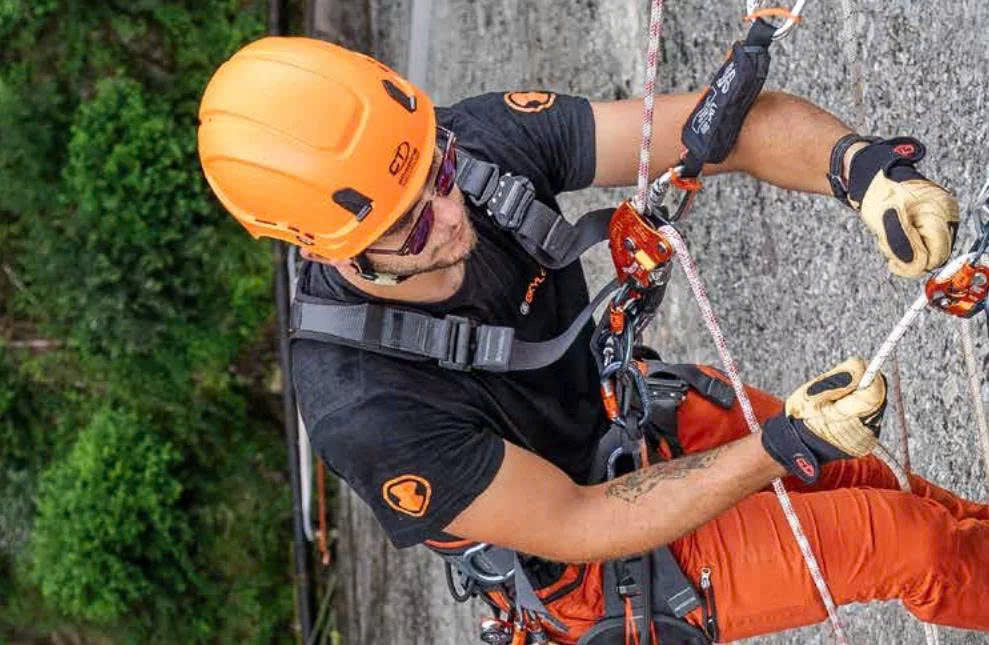
A rope access work seat, also known as a bosun’s chair or work seat, provides additional comfort and support for technicians who need to remain suspended for extended periods. It is particularly useful for tasks such as high-rise window cleaning, painting, façade maintenance, and building repair work.
By reducing pressure on the legs and lower back, a work seat helps improve comfort, productivity, and overall efficiency during prolonged rope access operations.
3.2.3. Key Features to Look for in a Rope Access Harness
A high-quality rope access harness should include the following features:
- Comfortable waist and leg padding for extended use
- Certified front and rear attachment points
- Adjustable straps for a secure and customized fit
- Durable, abrasion-resistant materials
- Ergonomic design for prolonged suspension and work positioning
Choosing a harness with these features helps improve worker comfort, mobility, and safety while meeting the demands of professional rope access operations.
3.3. Descenders and Ascenders
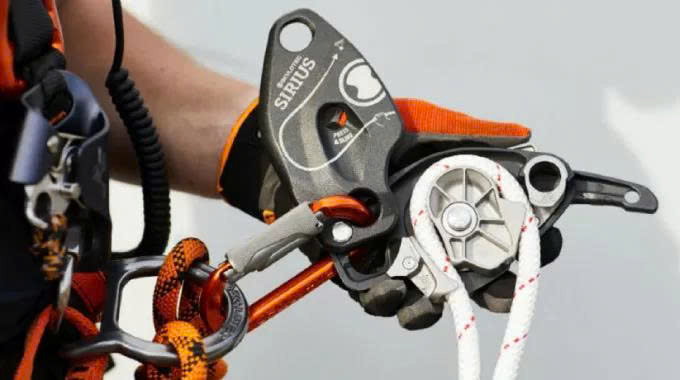
3.3.1. Descenders
A descender is a mechanical device used to control descent along a rope safely and efficiently. It allows technicians to regulate their speed while descending and maintain stable positioning during work-at-height operations.
As one of the core components of a rope access system, a descender provides smooth, controlled movement and enables workers to perform tasks safely and effectively in challenging environments. Modern descenders are designed with advanced braking mechanisms and safety features to ensure reliable performance during industrial rope access activities.
3.3.2. Ascenders
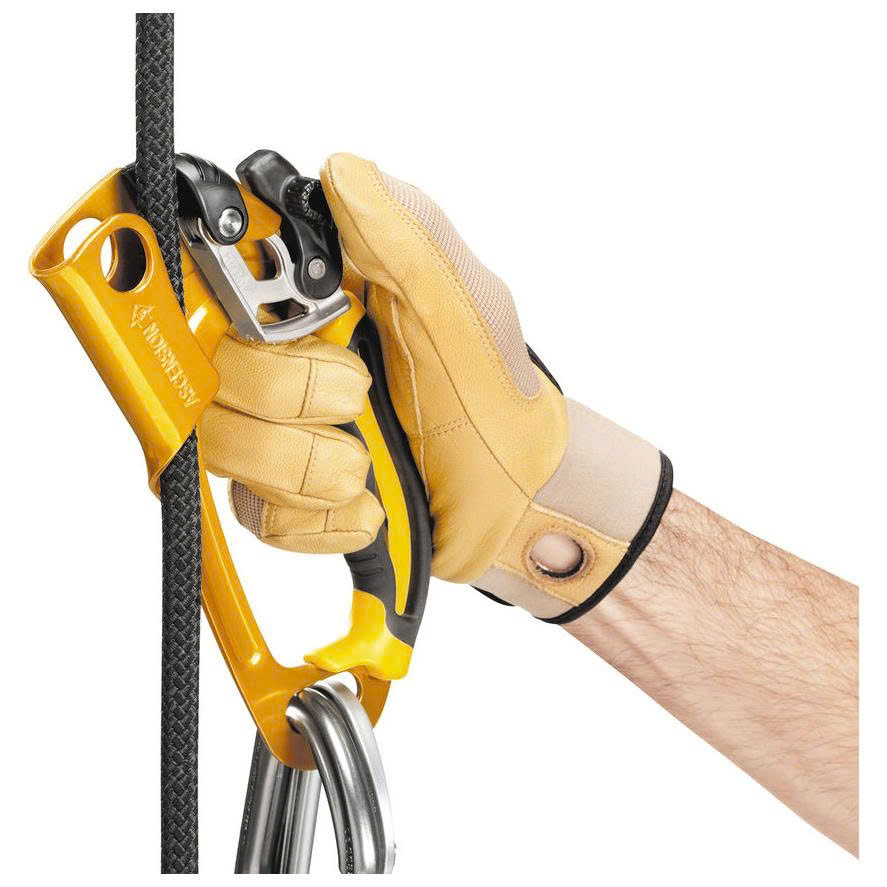
An ascender is a mechanical device designed to facilitate rope ascent, allowing technicians to climb ropes more efficiently while reducing physical effort. It is an essential component of many rope access systems, particularly when frequent or long vertical ascents are required.
Ascenders are commonly used in combination with a foot loop (foot ascender system) and a chest ascender to improve climbing efficiency and reduce fatigue. This setup enables technicians to maintain a more ergonomic body position and achieve smoother upward movement along the rope.
By providing secure rope grip and controlled progression, ascenders help workers ascend safely and efficiently while performing rope access, inspection, maintenance, and rescue operations at height.
3.3.3. The Role of Descenders and Ascenders in a Rope Access System
Descenders and ascenders are essential components of any rope access system, enabling technicians to move safely and efficiently while working at height. Together, these devices help to:
- Control rope ascent and descent safely and effectively
- Increase flexibility and mobility during work operations
- Reduce physical strain and fatigue on the user
- Enhance safety and operational control while performing tasks at height
By allowing precise movement and positioning on the rope system, descenders and ascenders contribute significantly to both worker safety and productivity. When used correctly as part of a properly designed rope access system, these devices help technicians access challenging locations while maintaining a high level of control and security.
3.4. Carabiners and Connectors
3.4.1. Auto-Locking Carabiners
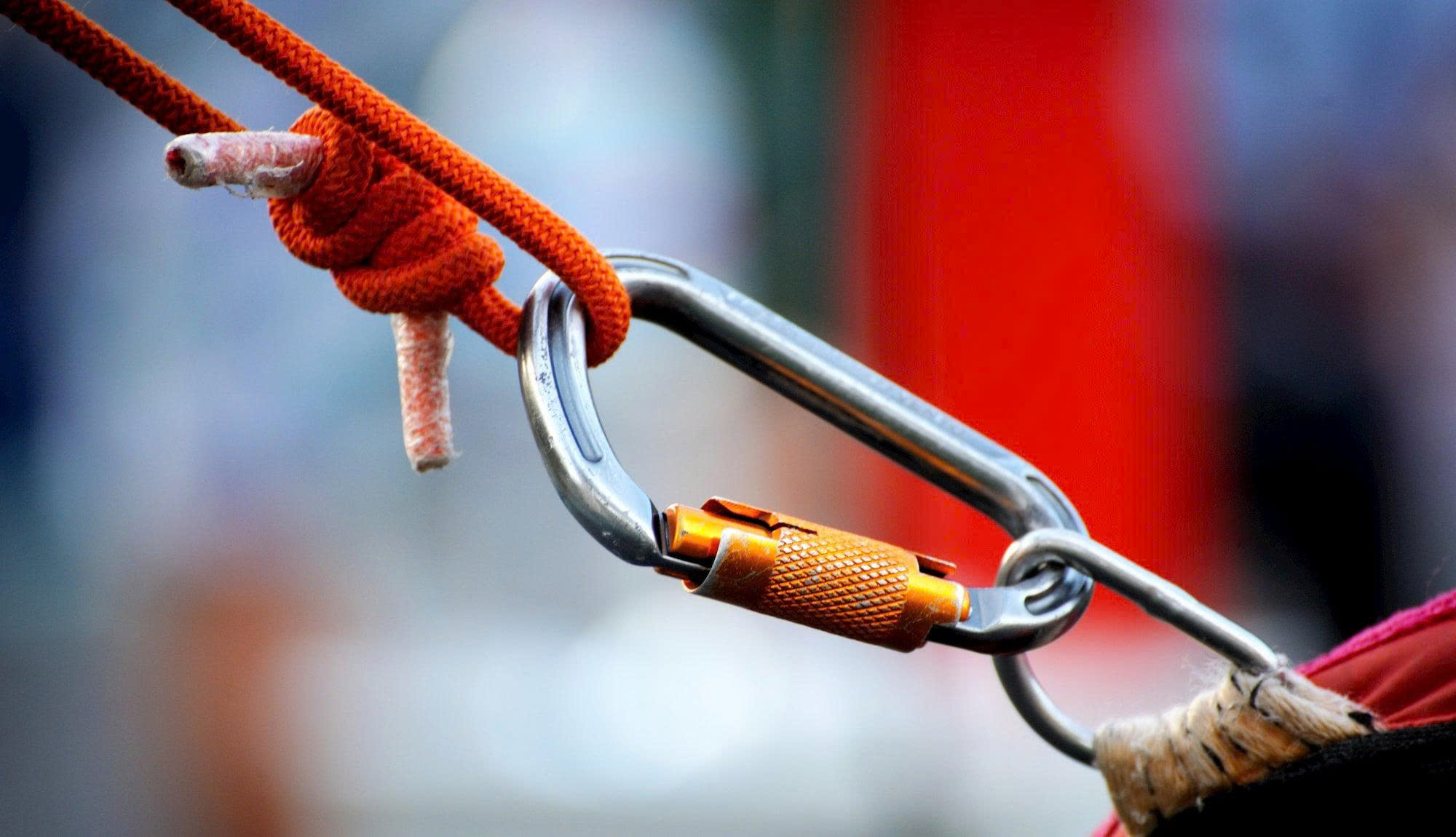
A carabiner is a critical connecting device used to link various components within a rope access system. It serves as the connection point between ropes, harnesses, descenders, ascenders, anchor systems, and other safety equipment.
Auto-locking carabiners are widely preferred in professional rope access applications because they significantly reduce the risk of accidental gate opening. Their automatic locking mechanism ensures that the gate closes and locks automatically after use, providing an additional layer of safety compared to manual-locking alternatives.
Due to their reliability, ease of use, and enhanced security, auto-locking carabiners are considered a standard component in many rope access, fall protection, rescue, and work-at-height systems.
3.4.2. Materials and Strength Ratings
Carabiners are commonly manufactured from the following materials:
Aluminum Alloy
Lightweight and easy to handle, aluminum carabiners are ideal for rope access applications that require frequent movement and equipment handling. They offer an excellent balance between strength and weight.
Steel
Steel carabiners provide superior durability and higher strength ratings, making them suitable for heavy-duty industrial applications, rescue operations, and environments where maximum load capacity is required.
Most certified rope access carabiners have a minimum major-axis strength rating of 20 kN or higher, ensuring reliable performance under demanding working conditions.
3.4.3. Safety Standards
Carabiners and connectors used in rope access systems should comply with recognized international safety standards, including:
- EN 362 – Personal protective equipment against falls from height – Connectors
- UIAA – Safety standards established by the International Climbing and Mountaineering Federation
- ANSI – American National Standards for fall protection and work-at-height equipment
Compliance with these standards helps ensure that carabiners and connectors provide the required strength, durability, and safety performance for use in rope access, fall protection, and industrial work-at-height applications.
3.5. Fall Protection Devices
Fall Arrester
A fall arrester is an automatic fall protection device designed to lock onto the safety rope when it detects an abnormal descent speed. This mechanism helps stop a fall quickly and significantly reduces the risk of serious injury during rope access operations.
Backup Device
A backup device functions as a secondary safety system attached to the safety rope. It is designed to protect the user in the event of a failure involving the working rope, descender, or primary rope access system. Backup devices are a critical component of modern rope access safety systems and provide an additional layer of protection during work-at-height activities.
Shock Absorber
A shock absorber is designed to dissipate and reduce the impact forces generated during a fall. By absorbing a portion of the fall energy, it helps minimize stress on the worker’s body while also reducing the load transmitted to the anchor system and connected equipment.
3.6. Helmets and Other Personal Protective Equipment (PPE)
Rope Access Helmet
A rope access helmet is specifically designed for work-at-height applications. It features a secure chin strap, high-impact resistance, and a stable fit to ensure reliable head protection while climbing, descending, or working in suspended positions.
Gloves
Protective gloves improve grip and hand control while handling ropes and equipment. They also help protect the hands from rope friction, abrasion, cuts, and other injuries commonly encountered during rope access work.
Tool Lanyards
Tool lanyards are used to secure tools and equipment while working at height, preventing dropped objects that could pose serious risks to personnel and property below. They are an essential part of dropped-object prevention programs in industrial environments.
Slip-Resistant Safety Footwear
Slip-resistant safety footwear helps workers maintain stability and traction on slippery surfaces, steel structures, ladders, and other challenging work areas. Proper footwear improves mobility, enhances safety, and reduces the risk of slips, trips, and falls in industrial settings.
4. How to Choose the Right Rope Access Equipment
Selecting the right rope access equipment is essential not only for maximizing productivity but also for ensuring worker safety. Different working environments require equipment with specific features, durability levels, and load-bearing capacities. Therefore, users should carefully evaluate several factors before investing in a professional rope access system.
4.1. Choosing Equipment Based on the Working Environment
4.1.1. Construction Sites
In the construction industry, rope access equipment is often exposed to dust, abrasive surfaces, and frequent contact with concrete or steel structures. For these conditions, it is recommended to prioritize:
- Rope access ropes with high abrasion resistance
- Durable harnesses designed for extended use
- High-strength carabiners and connectors
- Industrial-grade fall protection devices
- Equipment certified to recognized safety standards
4.1.2. High-Rise Window Cleaning
For window cleaning applications, comfort and mobility during prolonged suspension are critical. Recommended equipment includes:
- Rope access work seats for stable and comfortable positioning
- Descenders that provide smooth and precise descent control
- Lightweight and breathable harnesses
- Static ropes that deliver reliable performance at significant heights
4.1.3. Industrial Facilities
Industrial environments often involve high temperatures, chemical exposure, confined spaces, and demanding operating conditions. Equipment selected for these applications should offer:
- Corrosion-resistant materials
- High-strength ropes and connectors
- Specialized PPE designed for industrial environments
- Equipment certified to international safety standards
4.1.4. Wind Energy and Oil & Gas Industries
The wind energy and offshore oil and gas sectors require exceptionally high safety standards due to extreme working conditions and significant heights. A suitable rope access system should include:
- Equipment designed to withstand harsh weather conditions
- Resistance to corrosion from saltwater and chemicals
- Advanced fall protection systems
- Harnesses optimized for prolonged suspension and rescue operations
4.2. Choosing Equipment by Brand
Several internationally recognized rope access equipment manufacturers are trusted worldwide for their product quality, innovation, and compliance with international safety standards.
- Petzl – Renowned for professional rope access, rescue, and fall protection equipment.
- CAMP Safety – Known for lightweight, ergonomic designs suitable for a wide range of industrial applications.
- Skylotec – A German manufacturer specializing in work-at-height and fall protection solutions.
- Singing Rock – Popular for offering durable, reliable equipment at competitive prices.
- KONG – Well known for producing high-quality connectors, descenders, rescue devices, and specialized rope access equipment.
Choosing equipment from reputable manufacturers helps ensure product reliability, compliance with safety standards, long-term durability, and access to professional technical support and warranty services throughout the equipment’s lifecycle.
5. Benefits of Using Professional Rope Access Equipment
Using professional rope access equipment offers numerous advantages for work-at-height applications, particularly in industrial, construction, maintenance, and inspection environments. In addition to enhancing worker safety, rope access systems help optimize project costs, reduce downtime, and improve overall operational efficiency.
Related Article: Essential Rope Access Equipment Required for Working at Height
5.1. Enhanced Safety
Safety is the highest priority when working at height. Professional rope access equipment is designed and tested to comply with strict international standards such as EN, ANSI, and IRATA requirements, helping to minimize the risk of falls and workplace accidents.
A typical rope access system incorporates:
- Independent working and safety ropes
- Automatic fall protection devices
- Certified full-body harnesses
- High-strength connectors and anchor systems
These components work together to provide continuous protection for technicians operating at significant heights or in hazardous environments.
5.2. Greater Flexibility in Confined and Difficult-to-Reach Areas
One of the key advantages of rope access is its ability to provide safe and efficient access to locations that are difficult to reach using traditional methods, including:
- High-rise building façades
- Complex steel structures
- Confined spaces within industrial facilities
- Wind turbine towers
- Offshore platforms and structures
Compared to scaffolding and aerial work platforms, rope access allows technicians to move more freely while requiring minimal equipment footprint and setup space.
5.3. Lower Costs Compared to Scaffolding
Scaffolding systems often require significant labor, installation time, and operational expenses. In contrast, rope access equipment is lightweight, portable, and can be deployed much more quickly.
Organizations can reduce costs associated with:
- Scaffolding installation and dismantling
- Aerial work platform rental and operation
- Transportation of bulky access equipment
- Project downtime and worksite disruptions
For this reason, rope access has become an increasingly popular solution for maintenance, inspection, and construction projects at height.
5.4. Faster Project Execution
Thanks to the compact and flexible nature of rope access systems, technicians can begin work with minimal preparation time. This is particularly beneficial for projects involving:
- Emergency maintenance and repairs
- Structural inspections
- Routine window cleaning
- Tasks in difficult-to-access locations
Rapid deployment helps reduce project timelines and enables organizations to respond more efficiently to operational requirements.
5.5. Improved Productivity and Work Efficiency
Professional rope access equipment enables technicians to work more comfortably, safely, and efficiently while suspended at height. Modern equipment is specifically designed to:
- Reduce fatigue during prolonged suspension
- Facilitate smooth and controlled movement
- Improve positioning and workplace control
- Enhance efficiency when performing work-at-height tasks
When workers are equipped with a properly designed and certified rope access system, organizations benefit not only from improved safety performance but also from higher productivity, better work quality, and more efficient project execution.
6. Where to Buy Reliable Rope Access Equipment?
Choosing a reputable rope access equipment supplier is essential for ensuring product quality, workplace safety, and long-term operational performance. For work-at-height applications, using uncertified or low-quality equipment can pose significant risks to both workers and businesses.
6.1. Key Criteria for Choosing a Rope Access Equipment Supplier
When selecting a rope access equipment provider, consider the following factors:
- Distribution of genuine products from reputable manufacturers
- Availability of internationally recognized safety certifications
- Transparent product specifications and traceable origins
- Technical support from professionals with expertise in work-at-height applications
- Clear warranty policies and after-sales service
A professional supplier does more than simply provide equipment. They help businesses identify the most suitable rope access solutions based on specific operational requirements and working environments.
6.2. Prioritize Equipment with International Safety Certifications
Rope access equipment should comply with recognized international standards and certifications, including:
- EN Standards
- ANSI Standards
- IRATA Requirements
- UIAA Standards
- CE Certification
These certifications indicate that the equipment has been tested and verified for strength, durability, reliability, and safety performance in industrial and professional work-at-height environments.
Users should avoid purchasing low-cost products of unknown origin or equipment that lacks proper certification, as this can directly impact worker safety and operational effectiveness.
6.3. Warranty and Inspection Support
Rope access equipment is often used in demanding environments and requires regular inspection to maintain safe performance. Therefore, businesses should prioritize suppliers that offer:
- Transparent warranty policies
- Periodic equipment inspection support
- Spare parts replacement and after-sales services
- Guidance on proper equipment use, inspection, and maintenance
These services help extend equipment lifespan, maintain compliance with safety requirements, and reduce operational risks.
6.4. Professional Technical Consultation
Different industries—including construction, high-rise window cleaning, wind energy, and oil and gas—have unique rope access requirements. Receiving expert technical guidance from the beginning can help organizations:
- Select equipment that matches operational needs
- Optimize investment costs
- Ensure compliance with safety standards
- Develop more efficient work-at-height systems
As a specialized provider of work-at-height and rope access solutions in Vietnam, FPR Supply distributes products from internationally recognized manufacturers, including Petzl, CAMP Safety, Skylotec, Singing Rock, and KONG.
In addition to supplying genuine equipment that meets international safety standards, FPR Supply provides professional technical consultation to help businesses select the most appropriate rope access solutions for their specific working environments and operational requirements.
7. Conclusion
Rope access is a modern work-at-height solution that offers exceptional safety, flexibility, and efficiency across a wide range of industries, including construction, industrial maintenance, high-rise window cleaning, and wind energy. To maximize the effectiveness of a rope access system, selecting certified equipment from trusted manufacturers is essential.
As a trusted supplier of work-at-height and rope access equipment in Vietnam, FPR Supply provides genuine products from leading global brands such as Petzl, CAMP Safety, Skylotec, Singing Rock, and KONG. Combined with professional technical support and industry expertise, these solutions help organizations build safer, more efficient, and more reliable work-at-height operations.
